
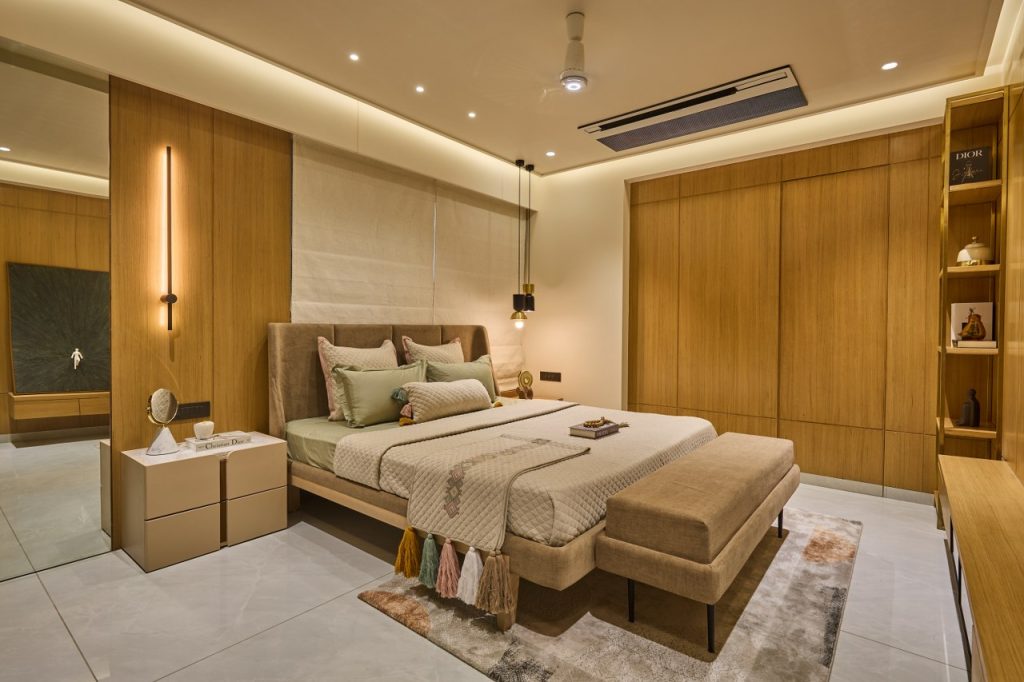
The terms are often used as if they mean the same thing. A new home needs “a designer.” A tired living room needs “a decorator.” In casual conversation, the distinction fades. In practice, the difference can reshape an entire project.
At first glance, both roles appear to revolve around aesthetics. Colour palettes, furniture, lighting, fabrics. Yet the scope beneath those surface choices varies significantly.
An interior designer engages with structure. They work with floor plans, spatial flow, technical drawings, and building regulations. Their involvement can begin before walls are built. Designers assess how rooms connect, how light moves through space, how circulation affects daily living. They consider mechanical systems, joinery design, electrical layouts, and sometimes planning constraints. In renovation projects, they may evaluate what can realistically be altered and what must remain. In new builds, they often collaborate early with architects to influence layout decisions before they become expensive to change.
A decorator works primarily with what already exists. Their focus is the visual layer: paint finishes, wallpaper, soft furnishings, accessories, and styling. They refine atmosphere without altering structural form. Where a designer might reposition a staircase or redesign a kitchen layout, a decorator might select cabinetry colours and choose window treatments. They may reupholster seating, introduce layered lighting through lamps and shades, and curate artwork to give a room personality and cohesion.
The difference becomes clearer when risk enters the picture.
Structural changes require technical understanding. Moving walls affects load distribution. Altering plumbing influences drainage. Lighting placement interacts with wiring plans. A trained interior designer often collaborates closely with architects, structural engineers, and contractors to manage these complexities. They interpret drawings, attend site meetings, and respond to unforeseen conditions that arise once construction begins. Mistakes at this stage carry financial consequences and can delay entire projects.
Decorating, while still requiring skill and judgement, operates within lower structural risk. The emphasis lies in coordination and taste. A decorator’s expertise often shines in fabric layering, artwork placement, and finishing details that elevate a space without major construction. They understand how texture affects warmth, how scale influences balance, and how colour can shift the mood of a room. The transformation can be dramatic, but the bones of the space remain intact.
Budget management also differs. Large renovation or new-build projects require staged budgeting. Designers forecast costs related to construction, bespoke joinery, specialist trades, and long-lead materials. They often track expenditure against allowances and adjust specifications when needed to protect the overall vision. Decorators manage budgets for furnishings and finishes, balancing investment pieces with more accessible items to achieve the desired aesthetic without overspending.
Education pathways often reflect this scope. Many interior designers hold formal qualifications covering spatial design, building standards, ergonomics, and sustainability. Their training addresses how people move through space and how buildings perform over time. Decorators may come from artistic, fashion, or styling backgrounds. They develop a strong eye for composition, colour harmony, and trend awareness. Both skill sets hold value, but they address different project needs.
Clients sometimes misjudge the requirement. A homeowner planning a full kitchen extension may approach a decorator, only to realise later that structural guidance was needed from the outset. Conversely, someone seeking a visual refresh may hire a designer when a decorator could achieve the desired outcome more efficiently and at lower cost. Clarity at the beginning prevents misalignment later.
Collaboration can blur boundaries. Some professionals offer both services. Others specialise strictly in one. The key lies in asking the right questions. Will walls move? Will lighting layouts change? Are planning permissions involved? Does the project require detailed construction drawings? If so, the project leans toward design rather than decoration.
The emotional experience differs as well. Design projects often involve longer timelines, site visits, and coordination with multiple trades. They can feel complex but ultimately transformative. Decorating projects may move faster and feel more focused on aesthetic renewal, delivering impact with less disruption.
An interior designer reshapes space at its core. A decorator enhances its surface. Understanding that distinction allows clients to align ambition with expertise, ensuring the right professional guides the project from concept to completion.
 jacky
jacky  Bravo
Bravo