
Dr. Amina runs a small general practice in Manchester. Three years ago her clinic was still scheduling appointments by phone, faxing referrals to specialists, and sending paper reminders for annual checkups. She’d looked at several patient engagement platforms but found them either too expensive for a practice her size or too generic to fit how her clinic actually operated. Then she had a custom patient portal built. It took four months, cost less than she’d expected, and within a year her no-show rate had dropped by a third and her staff were spending two fewer hours a day on administrative calls.
What made the difference wasn’t the technology itself. It was that the technology was built around how her clinic worked rather than asking her clinic to change how it worked to fit the technology. That gap between generic health software and purpose-built digital health tools is exactly where the conversation about choosing the right healthcare app development company sits, and it’s a gap that’s getting more consequential as the pace of change in digital health accelerates.
Here’s where that pace is actually heading.
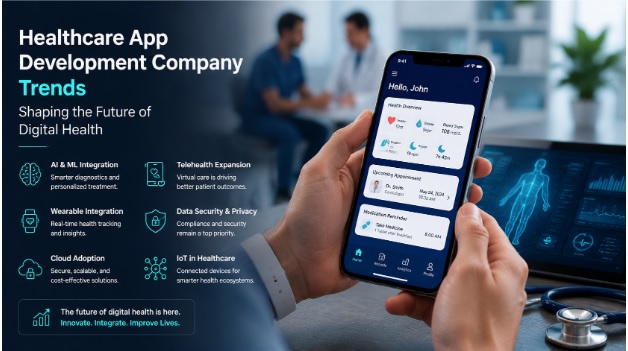
AI-Assisted Clinical Decision Support Is Moving From Research to Practice
For years, AI in healthcare apps meant chatbots for symptom checking or administrative automation for appointment scheduling. Both useful, both limited. What’s shifting now is AI moving closer to the clinical layer itself, not replacing clinical judgment but augmenting it in specific, high-value scenarios.
Radiology AI tools that flag anomalies for radiologist review have been in use for several years and have a credible evidence base behind them. What’s newer is AI-assisted documentation, tools that listen to a clinical encounter, generate a structured clinical note, and surface relevant information from the patient’s history, reducing the documentation burden that’s consistently cited as one of the primary drivers of clinician burnout.
Predictive risk stratification, identifying patients at elevated risk of deterioration or hospital readmission before the deterioration happens, is another area moving from academic research into practical deployment. The data infrastructure required, pulling from EHR systems, wearable data, and social determinants of health information, makes this a more complex build than most digital health projects, but the health outcomes and cost savings when it works are significant enough that health systems are increasingly willing to fund it.
For development teams, the implication is that AI integration is no longer an optional add-on feature in healthcare app proposals. It’s becoming a baseline expectation for anything positioned as a serious digital health tool.
Remote Patient Monitoring Has Found Its Product-Market Fit
The pandemic created a forcing function for remote care that exposed just how much chronic disease management had been unnecessarily tethered to in-person visits. Remote patient monitoring, where patients collect biometric data at home through connected devices and that data flows to care teams in near real time, has crossed from pilot programs into mainstream clinical practice for several chronic conditions.
Heart failure management using daily weight and fluid status monitoring, hypertension control using connected blood pressure cuffs, diabetes management integrating continuous glucose monitor data, post-surgical recovery monitoring using wearable vital sign sensors: these use cases have enough clinical evidence behind them now that they’re getting reimbursed through standard payer pathways in an increasing number of markets, which changes the economics of building for them considerably.
The development challenge is interoperability. A remote monitoring platform that only works with one device manufacturer’s hardware is a significant limitation. The shift toward FHIR-based data standards and manufacturer-agnostic integration architecture is making this more tractable, but it requires development teams with genuine experience in health data interoperability rather than just general API integration.
Mental Health and Behavioral Health Apps Are Maturing Fast
Mental health app proliferation happened quickly during and after 2020, and the quality range was enormous. A significant number of apps made clinical claims without clinical evidence, and regulatory scrutiny has increased in response. The FDA’s digital health software framework and the NHS’s digital health technology evaluation process have both raised the bar for what a credible mental health app looks like in a regulated market.
What’s emerging from that shakeout is a more mature product category. Apps with actual evidence bases, built in partnership with clinicians, validated through research, and integrated into care pathways rather than positioned as standalone solutions. Cognitive behavioral therapy tools built with clinical psychologists. Peer support platforms integrated into formal mental health care. Medication adherence tools connected to prescribers.
The development implication is that healthcare app development trends in behavioral health are moving toward clinical partnership and evidence generation as features of the development process, not afterthoughts. Apps built for this market without clinical advisors and without a clear pathway to evidence generation are increasingly at a disadvantage.
Interoperability and FHIR Have Become Non-Negotiable
HL7 FHIR (Fast Healthcare Interoperability Resources) has been a standard in development for years, but regulatory requirements in the US, specifically the CMS Interoperability and Patient Access Rule, have turned it from a best practice into a compliance requirement for apps that connect to covered health systems. The UK, Australia, and several EU member states have followed with their own interoperability mandates.
What this means practically is that healthcare apps need to be able to read from and write to EHR systems through FHIR APIs, and the major EHR vendors, Epic, Cerner (now Oracle Health), Athenahealth, and others, have published FHIR-based APIs that development teams can build against. The quality of those APIs and the support available for developers using them varies considerably, and navigating the specific implementation requirements for a given health system’s EHR is a real development skill rather than a general API integration task.
Development teams without genuine FHIR implementation experience often underestimate this complexity at the proposal stage, which leads to timeline and budget overruns that health system clients find predictable in hindsight but painful regardless.
Regulatory Fluency Is Now a Core Development Competency
HIPAA in the US, GDPR in Europe, and equivalent frameworks in other markets have always been relevant to healthcare app development. What’s changed is the specificity and enforcement intensity around digital health applications specifically. The FDA’s Software as a Medical Device (SaMD) framework, NHS DTAC requirements in the UK, and CE marking requirements for medical device software in Europe create compliance obligations that vary by what the software does and claims to do.
A development team that doesn’t understand where a given application sits within these regulatory frameworks, and what those classifications require in terms of clinical evidence, quality management systems, and post-market surveillance, is building something that may face significant regulatory obstacles regardless of its technical quality.
Dr. Amina’s Next Project
She’s planning a second phase that wasn’t possible three years ago: integrating her patient portal with a remote monitoring pilot for her diabetic patients, pulling continuous glucose monitor data from consenting patients into a dashboard her care coordinator reviews weekly. The technology exists. The FHIR connections to her EHR are technically feasible. The clinical workflow is designed.
What she’s looking for now is a development team that understands that the data integration is only part of the project, that the clinical validation, the information governance framework, and the staff training are as much a part of the deliverable as the code itself. Three years ago that level of sophistication in a development partner was hard to find at her scale. It’s becoming more common, which is probably the most encouraging trend in this entire space.