
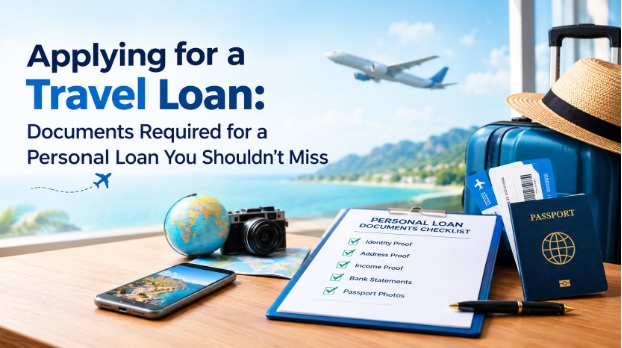
Planning an international holiday or a long-awaited domestic trip can be exciting, but travel expenses can sometimes put pressure on your savings. A travel loan, usually offered as an unsecured personal loan, can help you finance expenses such as flight tickets, hotel bookings, local transportation, sightseeing, and other travel-related costs. However, before applying, it is important to understand the documents required for a personal loan. Having the right documents ready can make the application process smoother and help lenders verify your identity, income, employment, and repayment capacity.
Why Are Documents Important When Applying for a Travel Loan?
When you apply for a travel loan, the lender evaluates your financial profile before approving the application. Since most personal loans do not require collateral, lenders generally rely on factors such as your income, credit history, employment stability, and existing financial obligations. The documents required for personal loan help the lender verify these details. Providing accurate and updated information can reduce the chances of delays caused by incomplete documentation or discrepancies in your application.
Documents Required for a Personal Loan
The exact documentation requirements can vary between lenders, loan amounts, employment types, and applicant profiles. However, most borrowers may be asked to provide a set of basic KYC, income, and financial documents.
1] Main Paperwork:
Identity and address proof are among the most common requirements. You may need documents such as an Aadhaar Card, PAN Card, passport, driving licence, or voter ID, depending on the lender’s accepted list. A passport can be particularly relevant for travellers, but it should not be assumed that every lender requires it specifically for a travel loan.
2] Salary Slips:
Income proof is another important part of the personal loan application. Salaried applicants may generally need recent salary slips and bank account statements showing salary credits. Some lenders may also request Form 16 or other income-related documents. Self-employed applicants may be asked to provide income-tax returns, bank statements, business-related documents, or financial statements. These documents allow the lender to assess whether your income is sufficient to manage the proposed loan EMI along with your existing obligations.
3] Financial Paperwork:
Bank statements are commonly used to understand an applicant’s cash flow and repayment capacity. Lenders may ask for recent statements covering a specified period. The statements can help verify regular income, existing loan repayments, and other financial transactions. Make sure the account details and personal information match the information provided in your loan application.
4] Employment and Business Proof:
Employment-related documents can also form part of the documents required for a personal loan. Salaried borrowers may be asked to provide an employment ID, appointment letter, or other proof of employment, depending on the lender’s requirements. Self-employed borrowers may need business registration documents, GST-related records, or other evidence of business activity. These requirements can differ significantly, so applicants should check the lender’s current documentation checklist before submitting an application.
Additional Documents You Should Not Miss
Depending on your profile, the lender may request additional documents. For example, if your current address differs from the address mentioned on your KYC document, you may need to submit an additional address proof. Existing loan details or repayment records may also be requested when the lender needs more information about your current liabilities. Applicants should also ensure that scanned copies or uploaded documents are clear and readable when applying online.
How to Prepare Documents Before Applying
Preparing your paperwork in advance can make the travel loan application process more convenient. Start by checking the lender’s official list of eligibility and documentation requirements. Keep your PAN and accepted identity and address proofs readily available, along with recent salary slips, bank statements, and income-tax documents where applicable. Check that your name, date of birth, address, and other details are consistent across documents. If any document has expired or contains incorrect information, resolve the issue before submitting your application.
It is also important to submit documents only through the lender’s official website, application, branch, or authorised channel. Avoid sharing sensitive financial or identity documents with unknown individuals or unverified websites. Applicants should also carefully review loan terms, interest rates, processing charges, repayment tenure, foreclosure conditions, and other applicable fees before accepting an offer.
Final Takeaway
Understanding the documents required for a personal loan is an important step when applying for a travel loan. KYC documents, income proof, bank statements, and employment or business-related documents are commonly used to verify an applicant’s profile, although exact requirements vary by lender. Preparing these documents correctly can help reduce application delays and make the borrowing process more organised. Before taking a travel loan, compare the total borrowing cost with your budget and ensure that the EMI remains manageable after accounting for your regular expenses and existing financial commitments.