
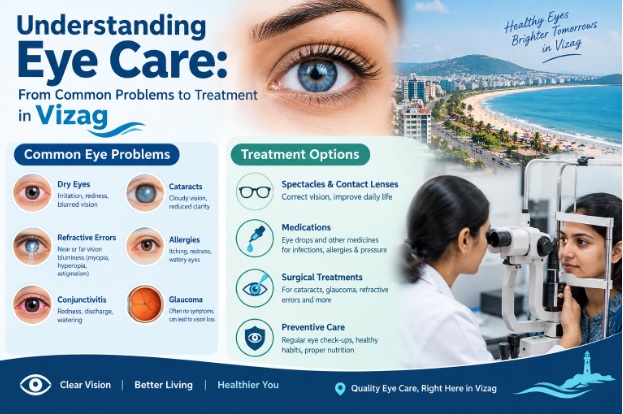
How often do you get your eyes checked? Many people seek medical attention only when they notice blurred vision, eye pain, or difficulty seeing clearly. However, regular eye care can help identify vision problems and certain eye conditions before they begin affecting daily activities.
Eye health can change with age, lifestyle, existing health conditions, and prolonged screen use. Understanding common eye problems, warning signs, and available treatment options can help people seek appropriate care at the right time.
Common Eye Problems to Know
Not every eye problem has the same cause. Some conditions may be temporary and improve with simple care, while others require examination and treatment.
Common eye concerns include:
- Short-sightedness and long-sightedness
- Dry eyes
- Eye infections
- Cataracts
- Glaucoma
- Eye allergies
- Refractive errors
- Age-related vision changes
- Diabetic eye problems
Symptoms can vary depending on the condition. Regular eye examinations can help identify vision changes and determine whether further evaluation is needed.
When Should You See an Eye Specialist?
Some vision changes should not be ignored, particularly when they appear suddenly or continue for an extended period.
| Symptom | Possible Reason for Evaluation |
| Blurred vision | May be linked to refractive errors or other eye conditions |
| Persistent eye pain | Can require assessment for infection, inflammation, or other causes |
| Redness or irritation | May occur with allergies, infections, or dry eyes |
| Difficulty seeing at night | Can be associated with certain vision or eye conditions |
| Sudden vision changes | Require timely medical evaluation |
| Frequent headaches with vision problems | May indicate a need for vision assessment |
People experiencing sudden loss of vision, flashes of light, a sudden increase in floaters, or severe eye pain should seek prompt medical attention.
Understanding Common Eye Conditions
Refractive errors are among the common reasons people need vision correction. Myopia, hyperopia, and astigmatism can make it difficult to see objects clearly at different distances. These conditions may often be managed with spectacles, contact lenses, or other suitable options based on an eye specialist’s assessment.
Cataracts occur when the natural lens of the eye becomes cloudy, which can gradually affect vision. When cataracts significantly interfere with daily activities, surgery may be considered.
Glaucoma is another important eye condition because it can develop without obvious symptoms in its early stages. Regular eye examinations can help detect changes in eye pressure and the optic nerve, allowing appropriate management when needed.
Eye Care and Screen Use
Long periods of screen use can contribute to symptoms such as dry eyes, eye strain, headaches, and temporary difficulty focusing. Simple habits may help reduce discomfort.
Following the 20-20-20 approach, taking regular breaks, adjusting screen brightness, maintaining an appropriate viewing distance, and remembering to blink can be useful. However, persistent symptoms should be discussed with an eye care professional rather than being attributed only to screen use.
What Happens During an Eye Examination?
An eye examination may involve more than checking whether a person can read letters from a distance. Depending on age, symptoms, and medical history, an eye specialist may assess visual acuity, eye movements, the front and back of the eye, and other aspects of eye health.
People looking for a Best Hospital in PM Palem may consider whether the healthcare facility provides eye consultations, diagnostic services, and access to specialists when additional evaluation is required.
Choosing the Right Eye Care Facility
When selecting a Best Hospital in Venkojipalem, patients may consider factors such as the availability of eye specialists, diagnostic facilities, treatment options, emergency support, and follow-up care.
The right choice can depend on the type of eye problem, the patient’s age, medical history, and whether ongoing treatment is required. For children and older adults, regular assessments may be particularly useful because changes in vision can sometimes develop gradually.
Protecting Eye Health Over Time
Good eye care involves more than treating an existing problem. Regular examinations, managing conditions such as diabetes and high blood pressure, protecting the eyes from injury, maintaining healthy habits, and seeking medical advice when vision changes can all support eye health.
For families who need healthcare services beyond Vizag, access to appropriate medical facilities also matters. Someone searching for a Best Hospital in Vizianagaram may consider the availability of eye care, diagnostic support, specialist consultations, and follow-up services before choosing a healthcare facility.
Paying attention to changes in vision and getting concerns assessed at the right time can help people take better care of their eyes. Even when vision appears normal, periodic eye examinations can provide useful information about changes that may not be immediately noticeable.