
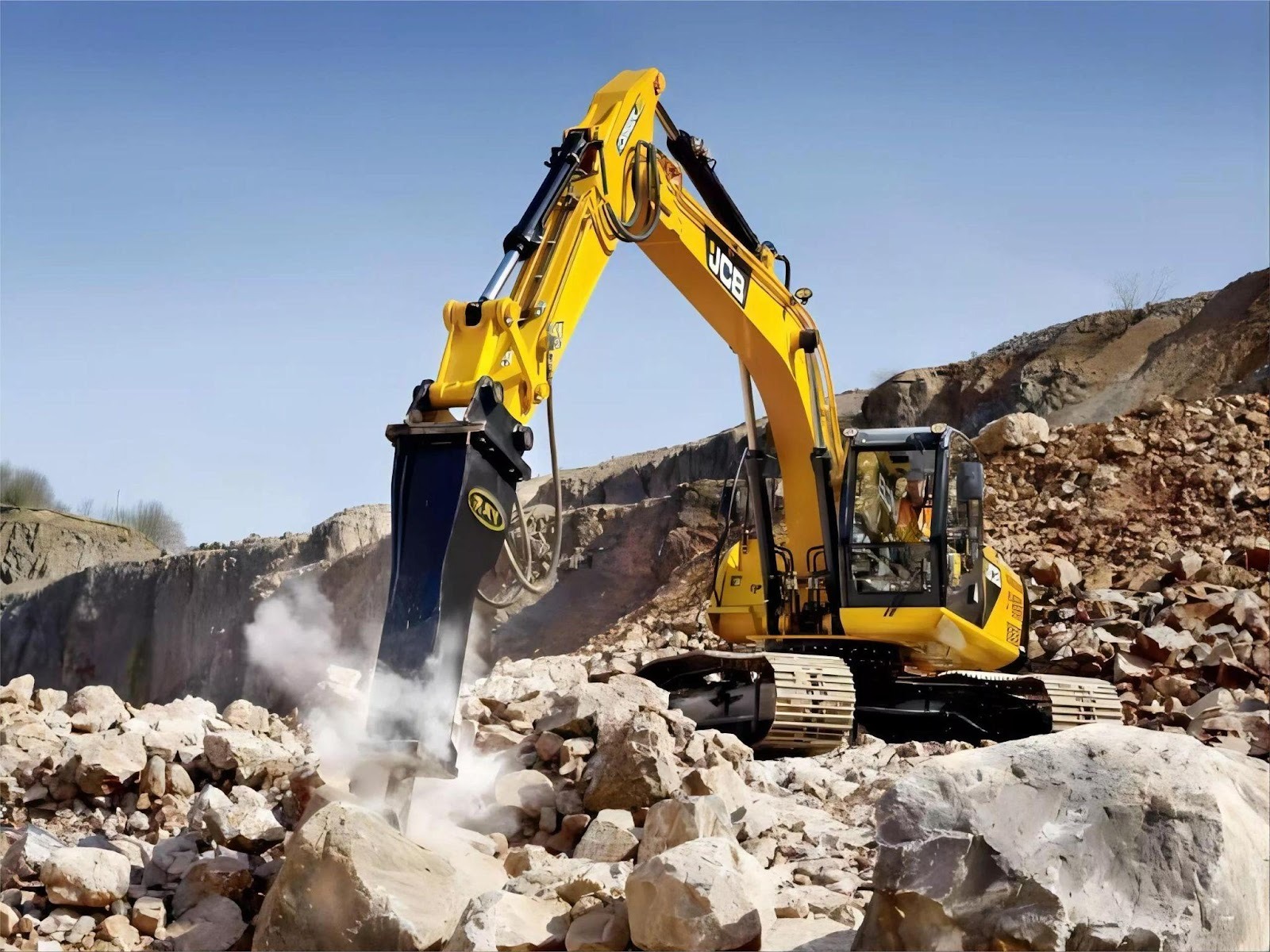
Construction demands speed, accuracy, and power—and falling behind schedule isn’t an option. Hydraulic breakers transform the way tough materials are handled, turning complex demolition into a fast, controlled process that saves time, reduces labour, and boosts productivity. See how this powerful tool reshapes productivity and keeps projects moving without delays or wasted effort.
Construction is a fast-paced industry where deadlines, budgets, and performance standards shape success. Whether working on road development, demolition, or quarrying, teams rely on equipment that delivers power and speed without sacrificing safety. Hydraulic breakers are a key part of this, providing the force needed to tackle tough materials efficiently. Designed to break through concrete, rock, and other hard surfaces quickly and effectively, they play a critical role in improving productivity and reducing operational costs across projects of all sizes.
Hydraulic breakers operate by delivering high-impact force through a piston mechanism powered by hydraulic pressure. Put simply, they replace hours—or even days—of heavy manual labour with fast, controlled impact energy. When paired with excavators, skid steers, or backhoe loaders, they turn machinery into versatile demolition and excavation tools.
For engineers, project managers, and contractors looking to maximise site performance, hydraulic breakers can be a game-changing investment.
Power and Precision for Tough Environments
Breaking reinforced concrete, natural rock, compacted asphalt, or foundation structures manually is not only time-consuming but also physically demanding. Hydraulic breakers streamline this process, enabling operators to complete challenging excavation and demolition tasks with accuracy and control.
The impact energy is delivered in a focused strike pattern, allowing operators to target specific areas without harming surrounding structures. This precision reduces rework, material wastage, and the risk of unnecessary fractures—an essential advantage when working near underground utilities or in restricted spaces.
High-quality hydraulic breakers are engineered to withstand continuous heavy-duty operation while maintaining reliable performance, making them a critical asset for demanding construction environments.
Improving Construction Speed and Cost Efficiency
Delays increase labour costs, equipment rental fees, and overall project expenses. Hydraulic breakers accelerate work timelines by reducing the time needed for breaking and removal tasks. Instead of multiple labourers working with handheld tools, one operator can complete the same work in a fraction of the time.
Key benefits include:
- Faster progress on excavation and demolition phases.
- Reduced machine idling time and fuel consumption.
- Lower workforce fatigue and fewer shift requirements.
- Improved coordination between project stages.
When a machine can break more material per minute, productivity rises immediately. The knock-on effect is smoother project scheduling and fewer bottlenecks.
Safer and More Consistent Operations
Safety is essential on any worksite. Manual demolition exposes workers to hazards like dust, vibration, repetitive strain, and debris impact. Hydraulic breakers significantly reduce these risks by limiting direct physical contact with material and transferring the majority of vibration to the machinery rather than the operator.
Additional safety advantages include:
- Minimal risk of tool kickback or uncontrolled fragmentation.
- Better visibility and control over the working surface.
- Less need for personnel near the breaking zone during operation.
- Reduced noise and vibration exposure with modern models designed through advanced engineering.
Well-designed equipment does more than perform tasks—it protects the workforce and creates a controlled environment for successful execution.
Versatility Across Multiple Applications
One advantage of hydraulic breakers is their ability to adapt to a wide range of machines and industries. They are used extensively in construction, mining, road maintenance, landscaping, and infrastructure repair. Equipped with interchangeable tools, such as chisels or moil points, they can handle varying material densities without requiring multiple machines.
Typical applications include:
- Primary and secondary demolition
- Removing concrete slabs and pavements
- Tunnelling and trenching works
- Breaking boulders and oversized rocks
- Quarrying and mining support tasks
This adaptability offers impressive value for money, especially when projects require multipurpose capability rather than specialised machines.
Actionable Tips for Better Efficiency Using Hydraulic Breakers
To achieve maximum performance and extend equipment life, consider the following best practices:
1. Choose the right size breaker
Match the breaker weight and hydraulic flow rate to the carrier machine. Oversized or undersized tools reduce impact efficiency.
2. Use the correct tool bit
Different tool shapes work best for tasks like concrete splitting, trenching, or scaling rock.
3. Maintain correct working angle
A vertical or slightly angled position ensures the energy travels directly through the material instead of deflecting.
4. Perform regular maintenance
Check lubrication, hoses, and tool wear for consistent power output and longer lifespan.
5. Avoid blank firing
Running the breaker without resistance increases wear and reduces productivity.
These simple practices can significantly enhance output and reduce downtime.
The Bottom Line: Why Hydraulic Breakers Matter
In a competitive industry where efficiency and precision determine profitability, hydraulic breakers offer undeniable advantages. By combining power, speed, and safety, they support faster decision-making and streamline demanding tasks. With the capacity to handle reinforced concrete, rock excavation, and structural demolition, they enable construction teams to operate confidently and achieve targets without delays.
For those aiming to improve overall project performance, investing in high-quality hydraulic breakers is a strategic step toward greater productivity and long-term value. The right equipment can be the difference between a delayed project and one completed on schedule and within budget. Now is the ideal moment to upgrade your approach and build with power, precision, and confidence.
 Bravo
Bravo